Pinot Noir: The Heartbreak Grape That Keeps Us Coming Back
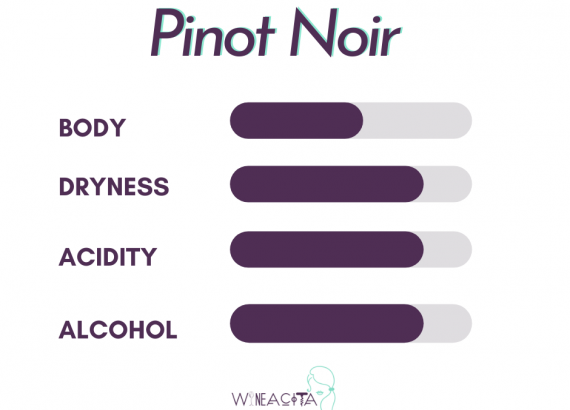
Pinot Noir isn’t just another red grape—it’s one of the oldest, most finicky, and downright fascinating varieties in the wine world. The name comes from the French for “pine” and “black,” thanks to its tightly packed, pinecone-shaped clusters. With thin skins, low tannins, and naturally higher acidity, Pinot Noir makes wines that are lighter in color, silkier in texture, and often bursting with red fruit like cherries, strawberries, and raspberries—sometimes wrapped up with a little earth, mushroom, or tea leaf for good measure.
It’s also incredibly versatile. Pinot Noir shows up in still red wines, elegant rosés, and sparkling wines like Champagne. It’s the grape that can go from a delicate glass of Burgundy to the backbone of a Blanc de Noirs fizz.
Why Pinot Noir Has a Reputation for Being “Difficult”
If Pinot Noir were a person, it would be the friend who insists on the room being exactly 68 degrees, the playlist just right, and the lighting soft—but then dazzles everyone once it’s happy. Winemakers call it the “heartbreak grape” for good reason:
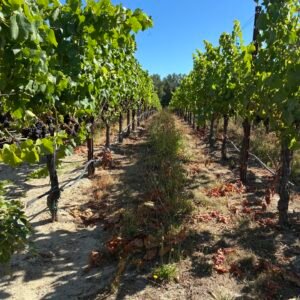
Sensitive to climate and soil: Pinot loves cooler climates (think Burgundy, Oregon, New Zealand) and suffers in heat. Too much sun or wind? Game over.
Prone to rot: Those pretty, tight clusters are basically a fungus magnet. Growers have to stay on top of canopy management.
Low yields, high stakes: For quality Pinot, vineyards usually sacrifice quantity. That’s why great Pinot is rarely cheap.
Touchy in the winery: Even after harvest, Pinot is fussy. It reacts to different fermentation methods, yeast strains, and oak choices more than most grapes.
The upside? All this sensitivity means Pinot Noir wears its terroir on its sleeve. A Pinot from Burgundy won’t taste like one from Sonoma, and that’s the beauty of it.
Pinot Noir’s Family Tree
Pinot is ancient—possibly one of the oldest cultivated grapes still around, with roots in Burgundy dating back to Roman times. And thanks to its genetic instability, it’s the parent (or at least close relative) of a whole bunch of other grapes:
Pinot Gris / Pinot Grigio – Just a color mutation of Pinot Noir.
Pinot Blanc – Another mutation, lighter-skinned still.
Pinot Meunier – Key Champagne grape, also from Pinot.
Chardonnay, Gamay, and others – All distant relatives through natural crossings.
Pinotage – A deliberate crossing of Pinot Noir and Cinsaut in South Africa.
Fun fact: Pinot Noir was the first fruit crop ever to have its genome fully sequenced (in 2007).
Where Pinot Noir Thrives
Though Burgundy is Pinot Noir’s spiritual and historical home, the grape has found happy places around the globe:
Burgundy, France – The benchmark. Earthy, floral, structured, and (in the case of Grand Cru bottlings) some of the most collectible wines on Earth.
Champagne, France – A major player in sparkling wine, especially Blanc de Noirs styles. Adds structure and depth to blends.
Oregon (Willamette Valley) – This is my personal favorite region for Pinot. Often compared to Burgundy, with cranberry, cherry, and truffle notes. Elegant, bright, and age-worthy.
California – From Russian River Valley to Sta. Rita Hills, California Pinots are typically richer, more fruit-forward, and lush, with cherry cola and spice notes.
New Zealand – Central Otago and Martinborough turn out vibrant, fruit-forward wines with a savory edge.
Germany (Spätburgunder) – Produces surprisingly Burgundian-style Pinots, with cherry fruit and savory undertones, often at great value.
Australia – Yarra Valley, Mornington Peninsula, and Tasmania are making cooler-climate styles worth exploring.
Other spots – You’ll also find Pinot Noir in Chile’s Leyda Valley, Italy (as Pinot Nero), Canada’s Niagara and Okanagan regions, and even South Africa’s Walker Bay.
Flavor and Aroma: What You’ll Actually Taste
Pinot Noir isn’t a one-note grape—it’s a whole orchestra. Depending on where it’s grown, you might pick up:
Red fruit – Raspberry, cherry, strawberry, cranberry.
Earthy notes – Mushroom, forest floor, truffle, tea leaf.
Florals – Rose petals, hibiscus.
Spice & oak – Cola, licorice, pepper, vanilla, clove, cocoa.
You’ll notice Pinot usually leans more on acidity than tannins. That’s why it feels silky and elegant rather than grippy or bold like Cabernet. The color is often a lighter garnet—don’t let that fool you; the flavor intensity is still there.
How to Serve and Pair Pinot Noir
Pinot Noir is the ultimate dinner party wine. It plays well with a wide range of foods and rarely overwhelms a dish.
Serving: Aim for 55–60°F (just a little cooler than room temperature). A quick 30-minute chill in the fridge usually does the trick. A decant never hurts, either—it helps open up all those delicate aromatics.
Food Pairings:
Salmon, tuna, or other fatty fish.
Mushroom risotto (the earthy-on-earthy combo is a winner).
Duck, pork tenderloin, or roasted chicken.
Game meats like venison.
Basically, it’s a “when in doubt, grab a Pinot” situation—it can bridge the gap when everyone’s ordering different dishes.
Can Pinot Noir Age?
The short answer: it depends.
Everyday Pinot – Many are made to be enjoyed right away, juicy and fruit-forward.
Mid-range Pinot – Quality bottles often hit their sweet spot in 5–10 years, adding savory notes along the way.
High-end Burgundy – Some Grand Cru Pinots can live gracefully for decades, developing layers of mushroom, leather, and truffle. These are often collector’s items that fetch serious money.
Even in sparkling wines like Champagne, Pinot Noir contributes to age-worthiness, giving depth and structure over time.
Pinot Noir may be nicknamed the “heartbreak grape,” but for many of us it’s also the one that keeps us coming back for just one more glass. From the silky, earth-driven bottles of Burgundy to the vibrant, fruit-packed styles of Oregon, California, and beyond, Pinot has a way of reflecting where it’s grown unlike almost any other grape.
It’s finicky, it’s fragile, and yes—sometimes it’s expensive. But when Pinot gets it right, it can be one of the most memorable wines you’ll ever drink.