Five Real Truths About How Wine Ages
Just do a quick Google image search for “wine cellar” and you’ll see rows of dusty bottles lined up in a dark, cool space. It’s the classic image of a serious wine collector, and it makes you believe that every good bottle will simply get better and better the longer you wait.
That picture is romantic, but it’s misleading. The truth is, most wines you buy today are not built to age for years or decades. They won’t magically become extraordinary with time. In fact, the vast majority are made to be enjoyed soon after you bring them home.
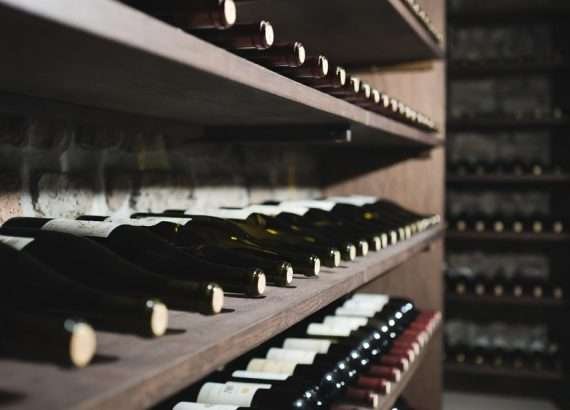 he truth is, most wines you buy today are not built to age for years or decades. They won’t magically become extraordinary with time. In fact, the vast majority are made to be enjoyed soon after you bring them home.
To help you build a collection you’ll truly love (and avoid common disappointments), here are five straightforward truths about how wine ages.
1. Most wine is made to drink right away.
Here’s the single biggest thing to understand: Roughly 90% to 95% of all wine produced today is made to be enjoyed soon after release, usually within a few years. Only about 1% to 5% has the structure to improve noticeably after a decade or longer in the cellar.
Aging changes a wine; it doesn’t always make it “better.” The bright, juicy fruit flavors of youth slowly turn into more complex notes: dried fruit, spice, nuts, leather, earth. Some people fall in love with those mature, layered flavors. Others prefer the fresh, lively taste of a young wine. Neither is wrong; it’s just personal preference.
2. Age-worthiness depends on chemistry, not just whether the wine is red.
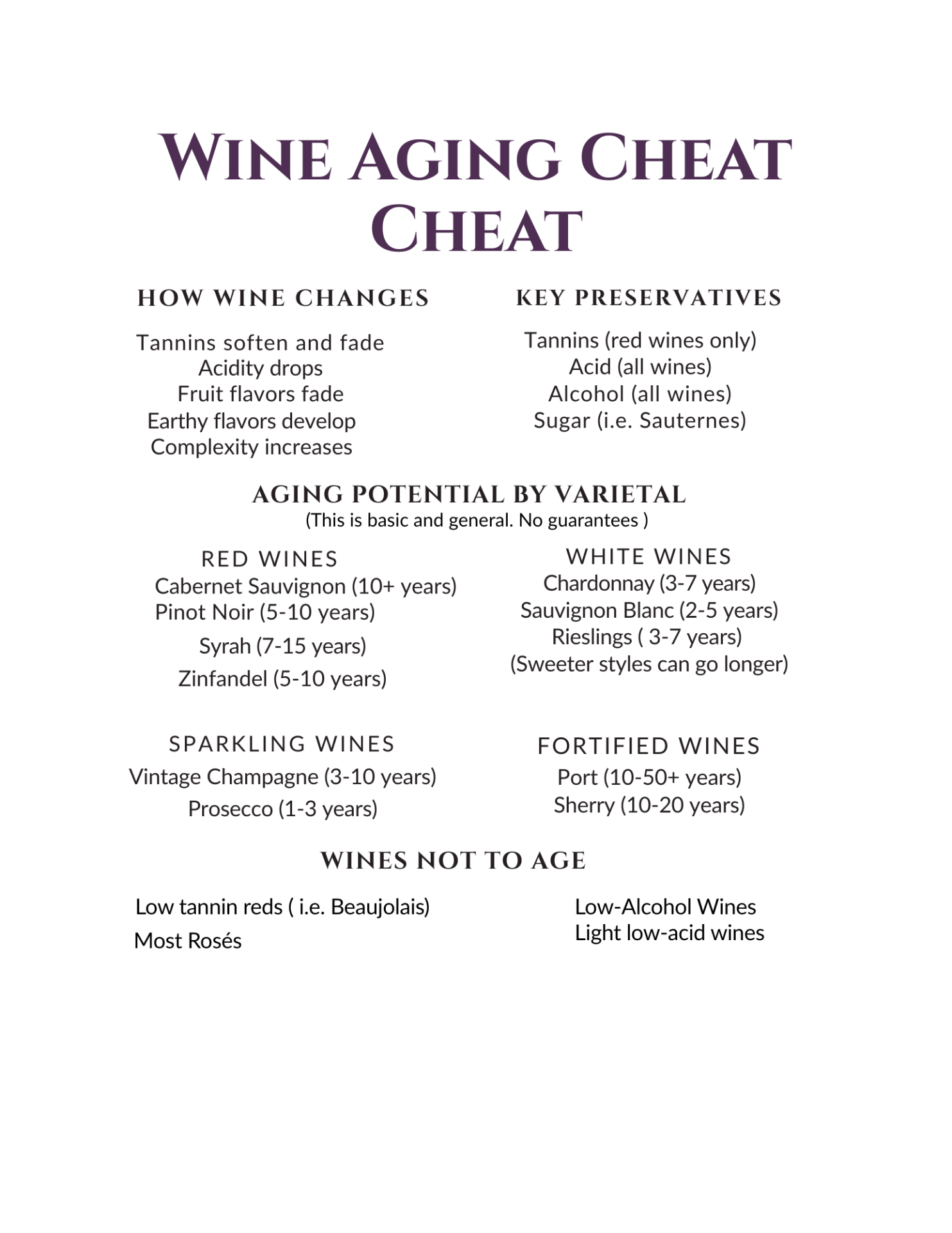
Many wines that age well are red, but the color itself isn’t what matters. What counts is the wine’s natural chemistry. Three main elements act like preservatives and help a wine develop interesting flavors over time instead of fading or spoiling:
- High tannins. These come mostly from red grape skins and give the wine grip and structure. Grapes such as Cabernet Sauvignon and Nebbiolo are naturally high in tannins, so their wines often age beautifully.
- High acidity. This sharp backbone keeps both red and white wines alive for the long term. It’s especially important for white wines that can age, like Riesling.
- High sugar. Sweet wines (certain Rieslings, for example) can last decades because sugar works as a strong preservative, especially when paired with high acidity.
Red wines show up more often in cellars because they pick up lots of tannins during fermentation with the grape skins.
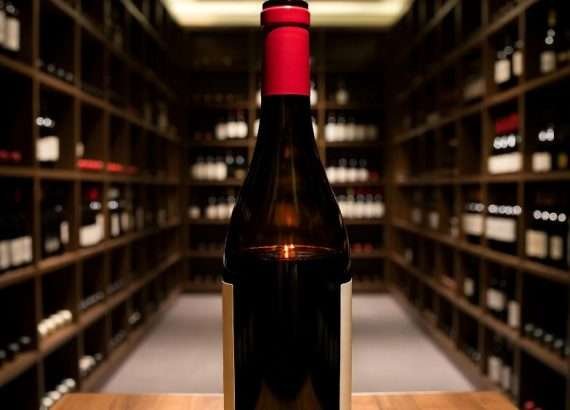 Red wines show up more often in cellars because they pick up lots of tannins during fermentation with the grape skins.
White wines usually have very little skin contact, so they rely almost completely on acidity to age well.
3. Bigger bottles age more slowly and often better.
The size of the bottle really matters. A magnum (1.5 liters, twice the size of a standard bottle) tends to age more slowly and more gracefully than a regular 750 ml bottle.
Here’s why: a magnum holds twice as much wine but has about the same small amount of air space under the cork. That means any tiny bit of oxygen that sneaks in has to work across a much larger volume of liquid, so the aging process slows way down. Erik Elliott, who runs Heitz Cellar, saw this clearly with the 2003 Château Lafite Rothschild: the half-bottle aged much faster than the magnum of the same wine (Source credit: Freedman, B. (2021, December 8). When aging wine, bottle size actually matters. Wine Enthusiast.).
Larger bottles also hold temperature more steadily, which helps protect the wine from small ups and downs in your storage conditions.
4. The cork plays an active role in aging.
The type of closure gives you a big clue about how long the wine is meant to last. Natural cork is slightly porous, so it lets in a very small, controlled amount of oxygen over many years. That slow trickle of oxygen is what helps create those complex, evolved flavors in aged wine.
Screw caps make a much tighter seal. They’re great at keeping the wine fresh and fruity, which is why most screw-cap wines are designed to be drunk young rather than cellared for a long time. This is an evolving opinion though and I have recently seen many more ageworthy reds in screw caps than before
5. Old wines need special care when you open them.
After waiting years for a bottle to mature, you want to get it right at the end. Two things make a big difference with older wines.
First, the cork in a bottle that’s ten or more years old can become dry, brittle, and crumbly. A regular corkscrew that punches through the middle often breaks it into pieces. Instead, use an Ah-So opener. It has two thin prongs that slide down the sides of the cork and grip it from the outside so you can pull it out in one piece.
Second, older wines often throw sediment (a harmless deposit that settles at the bottom). To keep your glasses clear, stand the bottle upright for at least a few hours before opening so the sediment drops to the bottom. When you pour, go slowly into a decanter and watch the neck of the bottle carefully. Stop pouring just before the sediment reaches the lip.
If you want to be extra sure, you can strain the last bit through a piece of cheesecloth.
The Question That Changes Everything
Aging wine is something you do on purpose with only a few special bottles. It’s not something that happens automatically to everything you buy.
Once you understand which wines can evolve and why, you’ll choose bottles with much more confidence. So the next time you pick up a wine, don’t just ask yourself, “When should I drink this?” Ask instead: “Was this wine ever meant to wait?”
And, ultimately, wine is meant to be drank and enjoy, so cheers!