Wine & Thanksgiving Dinner: Your Go-To Guide To Pairings
Thanksgiving Wine: What to Bring and How Much to Buy
I used to cook a lot more than I do now. In theory, I still enjoy it. In practice, life has gotten in the way, and my husband does more of the cooking these days.
But this career in wine has given me a fairly predictable assignment at just about any holiday dinner or family gathering: bring the wine.
Fair enough. Someone else can figure out the turkey.
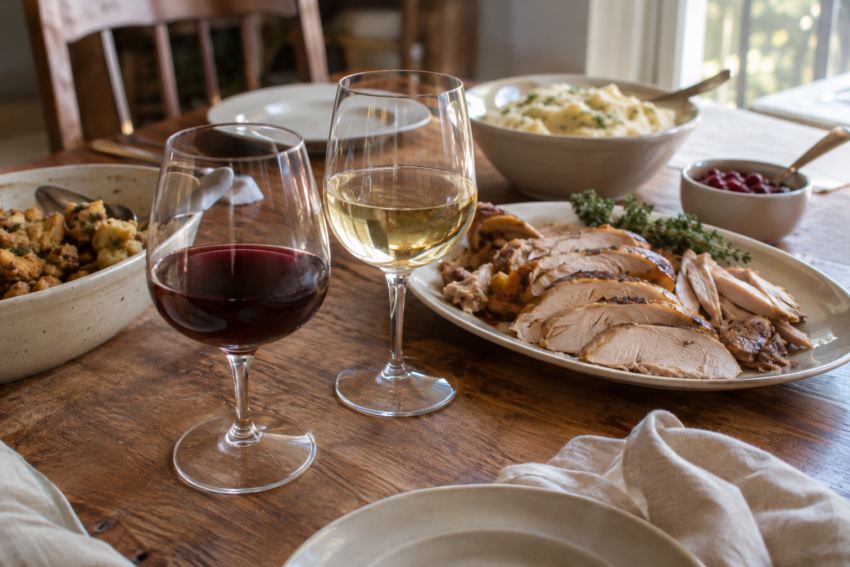
Of course, choosing wine for Thanksgiving comes with its own questions. You’ve got turkey, gravy, stuffing, cranberry sauce, and possibly something covered in marshmallows, all on the same plate. Then there are the people drinking it. Some only drink red. Some prefer something sweet. Someone will tell you they like “anything,” which, if I am being honest, is never as helpful as it sounds.
Here’s how I’d keep it manageable.
Start with a white and a red
You don’t need a different wine for every dish. We’re already planning to fall asleep on the couch after dinner. No need to turn it into a six-wine tasting first. I’d pick a white and a red that work with most of what’s on the table, then let people pour what they like.
A few good places to start:
Riesling
I’ll admit it. I’m always going to make a case for Riesling, and Thanksgiving gives me a particularly good excuse. If your first thought is “too sweet,” we need to talk. Riesling can be dry, too. A dry style is great with dinner, while an off-dry version has a little sweetness that works well with cranberry sauce and sweet potatoes. Both have that mouthwatering acidity I love, which is welcome when almost everything on the table involves butter.
Chardonnay
Chardonnay makes sense when you think about how much butter goes into Thanksgiving dinner. A richer style can work beautifully with the turkey, gravy, and mashed potatoes. I like one with enough acidity to keep it from feeling too heavy alongside everything else we’re eating.
Pinot Noir
There’s a reason Pinot Noir shows up on so many Thanksgiving wine lists. It has enough flavor for the darker turkey meat and savory stuffing without overwhelming the white meat. Those cherry and cranberry notes make sense alongside the cranberry sauce, while earthier styles are especially good with mushrooms and herbs. It also tends to have more acidity and less tannin than Cabernet Sauvignon, so you get freshness without as much of that drying sensation. I’d lean toward a brighter, less heavily oaked bottle for this meal.
Beaujolais
I ALWAYS have a Beaujolais on my Thanksgiving table. This year, it’s J. Boulon Brouilly. As much as I enjoy choosing something different each year, Beaujolais has a permanent spot.
If your experience with Beaujolais begins and ends with Nouveau, there’s a lot more to explore. Nouveau is the young, fresh wine released just weeks after harvest. It can be fun, but it’s only one part of the region’s story.
Most red Beaujolais is made from Gamay, a grape that gives us bright red fruit, refreshing acidity, and generally gentler tannins. That combination is particularly useful at Thanksgiving, when nobody’s plate looks quite the same.
For an everyday introduction, try Beaujolais-Villages. Then there are the ten crus, specific growing areas with their own appellations and personalities. You’ll usually see the cru’s name prominently on the label, so that bottle of Morgon or Fleurie you’ve walked past? Also Beaujolais.
A few worth knowing:
- Brouilly: Often generous and fruit-forward, with berry flavors and enough substance for dinner. This is where my Thanksgiving bottle comes in.
- Fleurie: Often more floral and fragrant, with a silky quality that makes it a lovely option for Pinot Noir drinkers.
- Morgon: Generally fuller and more structured, with deeper fruit and an earthy character. A good direction if you want a little more weight.
- Moulin-à-Vent: Often firmer and more powerful, with the ability to develop beautifully with age. Beaujolais can absolutely be a wine you put away for later.
These are broad tendencies, of course. The producer and vintage matter, too.
For Thanksgiving, I love that Beaujolais brings plenty of flavor without making an already substantial meal feel heavier. It works with turkey, herbs, and savory stuffing, and that fresh fruit is welcome alongside cranberry sauce. Give it a slight chill before serving.
This year, I’m bringing the J. Boulon Brouilly from my day job as Wine Manager at Tim’s Wine Market. If you’re shopping somewhere else, ask what cru Beaujolais they recommend. There’s a whole region beyond Nouveau, and Thanksgiving is a pretty good excuse to get acquainted.
If I were choosing just two styles, I’d start with Riesling and Beaujolais. But if your guests love Chardonnay and Pinot Noir, go with those. Knowing your audience counts for something.
And, quite frankly, if your family wants Cabernet, serve Cabernet. I can give you pairing suggestions all day, but I’m not going to argue with someone who’s happy with what’s in their glass.
And yes, you can serve bubbles with dinner
I wouldn’t put the sparkling wine away once everyone sits down. Champagne, Cava, Crémant, and sparkling rosé can work beautifully with dinner, especially with all the rich food on the table. If you’re someone who saves bubbles for a special occasion, Thanksgiving seems like a reasonable excuse to open them. And…if you really don’t know what to drink…bubbles are a natural palate cleanser and versatile enough for almost any dish.
Lambrusco deserves a mention here, too. This Italian sparkling red brings bright berry fruit and comes in styles ranging from dry to sweet. An off-dry version is especially worth considering with cranberry sauce and sweeter sides. Just ask what style you’re buying so you know what to expect.
Save a little thought for pie
If your red wine suddenly tastes bitter after a bite of pumpkin pie, the dessert may be the reason. Sweet food can make dry wine taste sharper and less fruity.
For a dessert pairing, choose a wine at least as sweet as the pie. Try sweet late-harvest Riesling with apple or pumpkin pie, or cream Sherry with pecan pie.
Personally, I think coffee is a perfectly respectable pairing at this point. You’ve already fed everyone.
So, how much wine do you need?
“Bring the wine” sounds straightforward until you realize you don’t know whether people are coming just for dinner or spending the entire afternoon.
A standard bottle holds about five 5-ounce glasses. How many bottles you need depends on how many people drink wine, how long they’re staying, and what else you’re serving. Your family’s interpretation of a “glass” also factors into this.
I built my free wine calculator to help with exactly this kind of planning. Put in the details of your gathering and use the estimate as a starting point for shopping. Open bottles as you need them.
While you’re planning drinks, include something good for anyone who isn’t drinking alcohol. Sparkling apple cider, sparkling tea, or cranberry juice with seltzer are easy options. Put them out with everything else so guests can help themselves.
As for me, I’ll bring the wine. My husband will probably have made something, too.