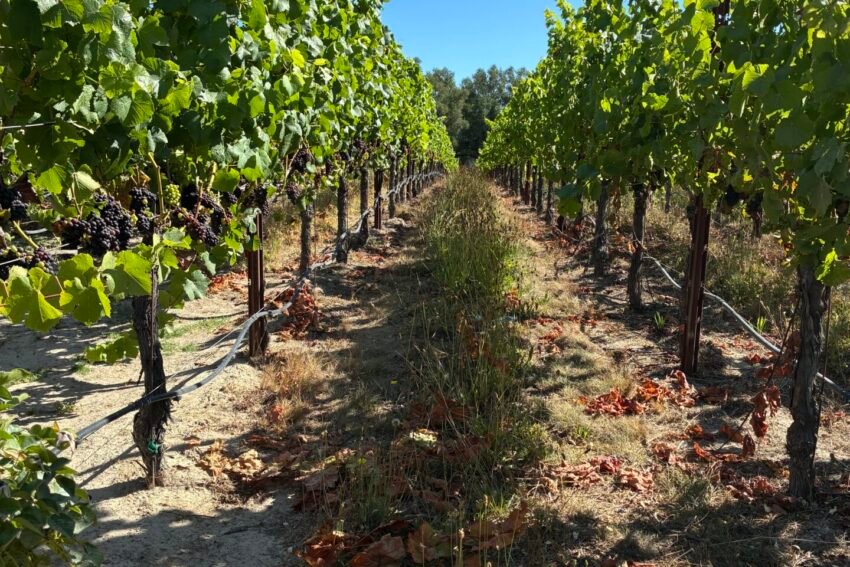
Why the Best Winemakers Think Like Farmers
Three days at the Russian River Valley Pinot Forum changed how I think about winemaking.
For years, I’d pictured a winemaker in a cellar.
Maybe it’s because that’s the image we’re most often given. Stainless steel tanks. Rows of French oak barrels. A wine thief tucked into the back pocket of a pair of jeans. Someone making decisions about fermentation, blending, and aging.
It’s not that I thought vineyards were less important. Every WSET student learns early that great wine begins in the vineyard. We study climate, soils, canopy management, irrigation, crop thinning, and harvest decisions. I’d spent years learning that great wine starts long before the grapes reach the winery.
What I hadn’t appreciated was just how little separation exists between the vineyard and the cellar.
Thanks to the generosity of my host winery, Gary Farrell Winery, my introduction to the Russian River Valley began around a dinner table rather than a seminar table. There were remarkable wines, generous conversation, and by morning, just enough of a reminder that I’d thoroughly enjoyed both.
The first session began much the way I’d expected. A long table stretched across the room, each place setting lined with a dozen glasses waiting to be explored. And it was only nine in the morning.
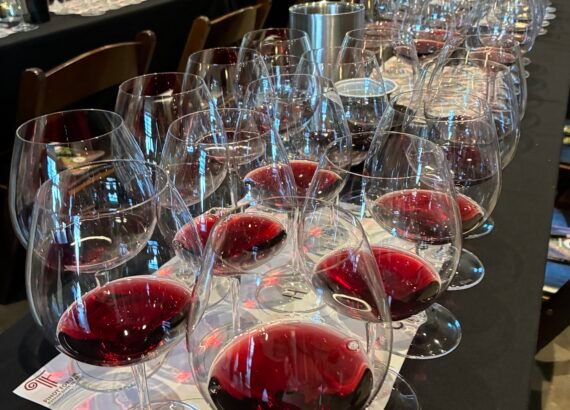 “The first session began much the way I’d expected. A long table stretched across the room, each place setting lined with a dozen glasses waiting to be explored. And it was only nine in the morning.”
Before me sat a neat row of Pinot Noirs, each representing a different vineyard or producer from across the Russian River Valley. Around me were winemakers, vineyard managers, sommeliers, buyers, and educators whose combined experience represented generations in the wine industry.
As the winemakers guided us through the wines, conversations drifted naturally toward clones, fermentation, oak, acidity, texture, and site. These weren’t polished conference speakers delivering rehearsed presentations. They were the very people who had grown the fruit, made the wines, and carved time out of an already demanding season to share what they’d learned. It was exactly the kind of deep dive I’d hoped for, and exactly what I’d expected from one of the country’s premier Pinot Noir gatherings.
Around me sat people who had spent decades making, growing, buying, and studying wine. I found myself listening more than talking, partly because I wanted to learn, and partly because I was still trying to convince myself I deserved a seat at the table. Looking back, I’m grateful for that feeling. It kept me from worrying about saying something impressive and allowed me to notice something I might have otherwise missed.
If you’d asked me then where a winemaker spent most of their time, I probably would’ve pointed toward the cellar. Three days later, I wouldn’t have answered the same way.
A discussion about fermentation would soon become a conversation about the fruit. Questions about blending led to harvest decisions. Before long, we were talking about fog patterns, soils, and farming. The cellar was never the whole story.
By the first afternoon, that realization became impossible to ignore.
Instead of standing in a cellar discussing fermentation or tasting barrel samples, we gathered around a soil pit dug several feet into the earth. Layers of Goldridge sandy loam and fractured sandstone were exposed like pages in a history book, each one telling part of the vineyard’s story.
I’d come expecting to spend the weekend learning how great Pinot Noir is made. What I hadn’t expected was that one of the most memorable discussions would take place standing around a hole in the ground.
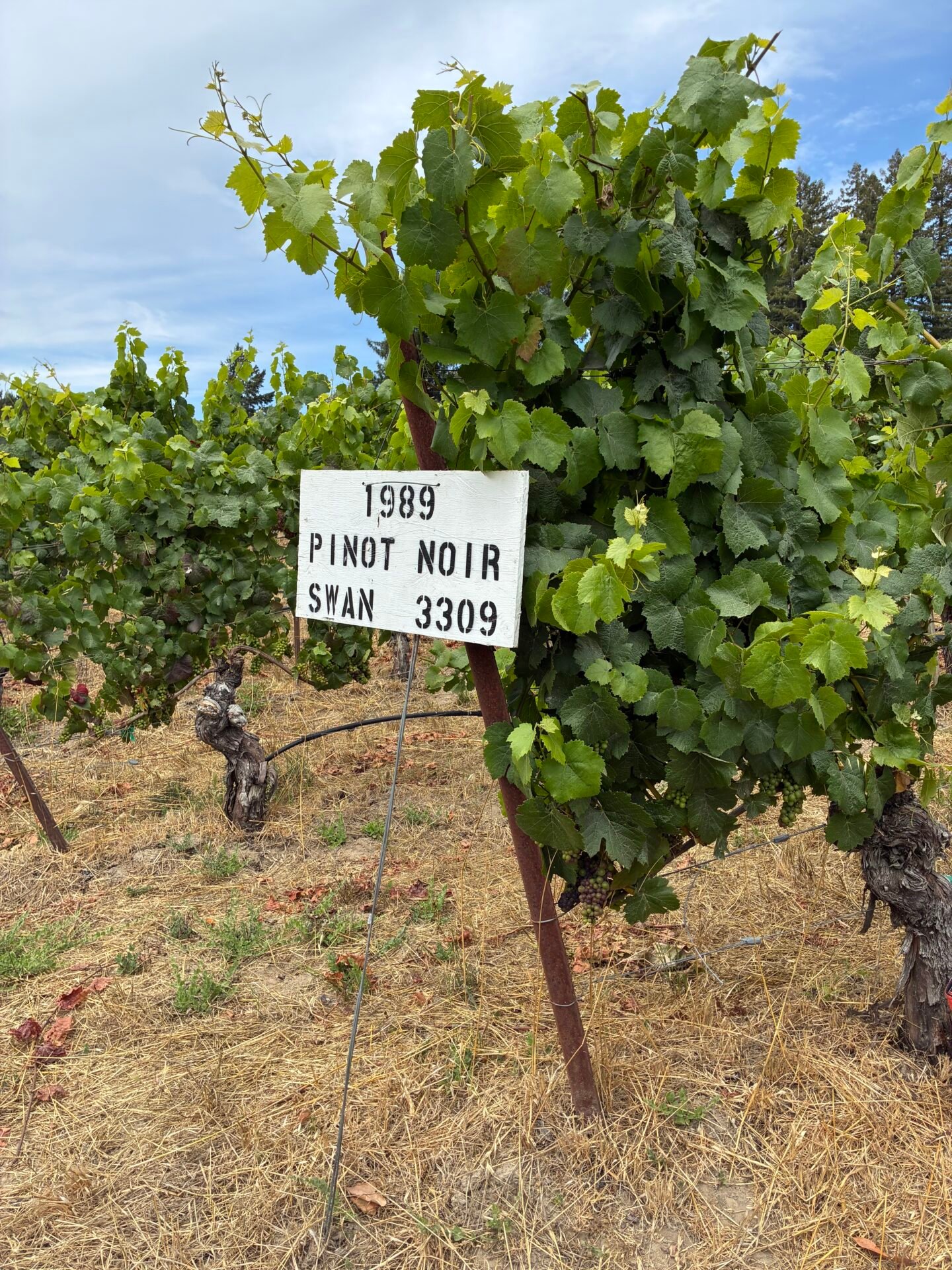 Pinot Noir Vineyard at Marimar Estate
As the conversation unfolded, it wasn’t just about soil. It was about water movement, root depth, exposure, and the countless decisions those conditions would shape long before the grapes ever reached the winery.
More than once, I caught myself thinking, I should write that down.
There were dozens of moments like that. A thoughtful observation. A perfectly phrased explanation. A sentence that seemed to capture something bigger than the topic at hand.
Most of those quotes disappeared almost as quickly as they came. I was too absorbed in the experience to scribble down every memorable line.
One stayed with me.
“Site trumps clone.”
Jeff Mangahas, Winemaker for Williams-Selyem Winery, said it almost matter-of-factly, but it landed differently after everything I’d already heard.
It wasn’t simply a comment about Pinot Noir. It captured the philosophy I’d been hearing all weekend. For all the discussion surrounding the various Pinot Noir clones, fermentation, barrels, and cellar techniques, everything ultimately came back to place.
In Russian River, that connection to place felt almost inseparable from the people themselves. They didn’t talk about the region in broad strokes. They talked about individual vineyards, morning fog that lingered a little longer in one corner of a site, afternoon sun on a particular slope, and soils that changed within a few rows. It wasn’t pride for the sake of marketing. It was the quiet confidence of people who knew this landscape intimately because they’d spent years walking it.
Without realizing it, I’d romanticized winemaking. I’d imagined artistry. Creativity. Barrel rooms that smelled faintly of oak and fermentation. Those things are certainly part of the job. Great wines don’t happen without craftsmanship or vision.
What I hadn’t appreciated was that every blending decision, every fermentation choice, and every bottle that eventually lands on a restaurant table begins months earlier, shaped by weather, disease pressure, water availability, and hundreds of decisions made before harvest.
The cellar doesn’t erase those choices. It reveals them.
That realization changed the way I watched the people around me. Their eyes drifted toward the vineyard as they talked. They pointed toward slopes, rows, fog lines, and afternoon sun. They discussed last year’s weather as easily as someone else might discuss last night’s baseball game. There was an intimacy to the way they spoke about their sites, not because they were trying to be poetic, but because they had lived every decision together.
These weren’t people just waiting to make wine. They were people trying to grow the best grapes they possibly could.
It’s easy, as consumers, to romanticize what happens after harvest. We admire beautiful tasting rooms, polished bottles, elegant labels, and stories about the winemaker’s vision. Those things matter.
But what I left Russian River understanding is that great wine is less about control than stewardship.
The best winemakers aren’t simply artists.
First, they’re farmers.
The cellar may be where wine is transformed, but the real work begins months earlier, often before sunrise, in rows of vines that don’t care how talented you are. Mother Nature doesn’t negotiate. Mildew doesn’t respect experience. Frost doesn’t wait for convenience.
Every vintage is earned.
As I flew home, I realized I hadn’t learned nearly as much about Pinot Noir as I’d expected. Instead, I’d gained a deeper appreciation for the people who dedicate their lives to growing it. The next time I open a bottle, I’ll still notice the aromas, the texture, the balance, and the finish. But before any of that, I’ll think about the vineyard.
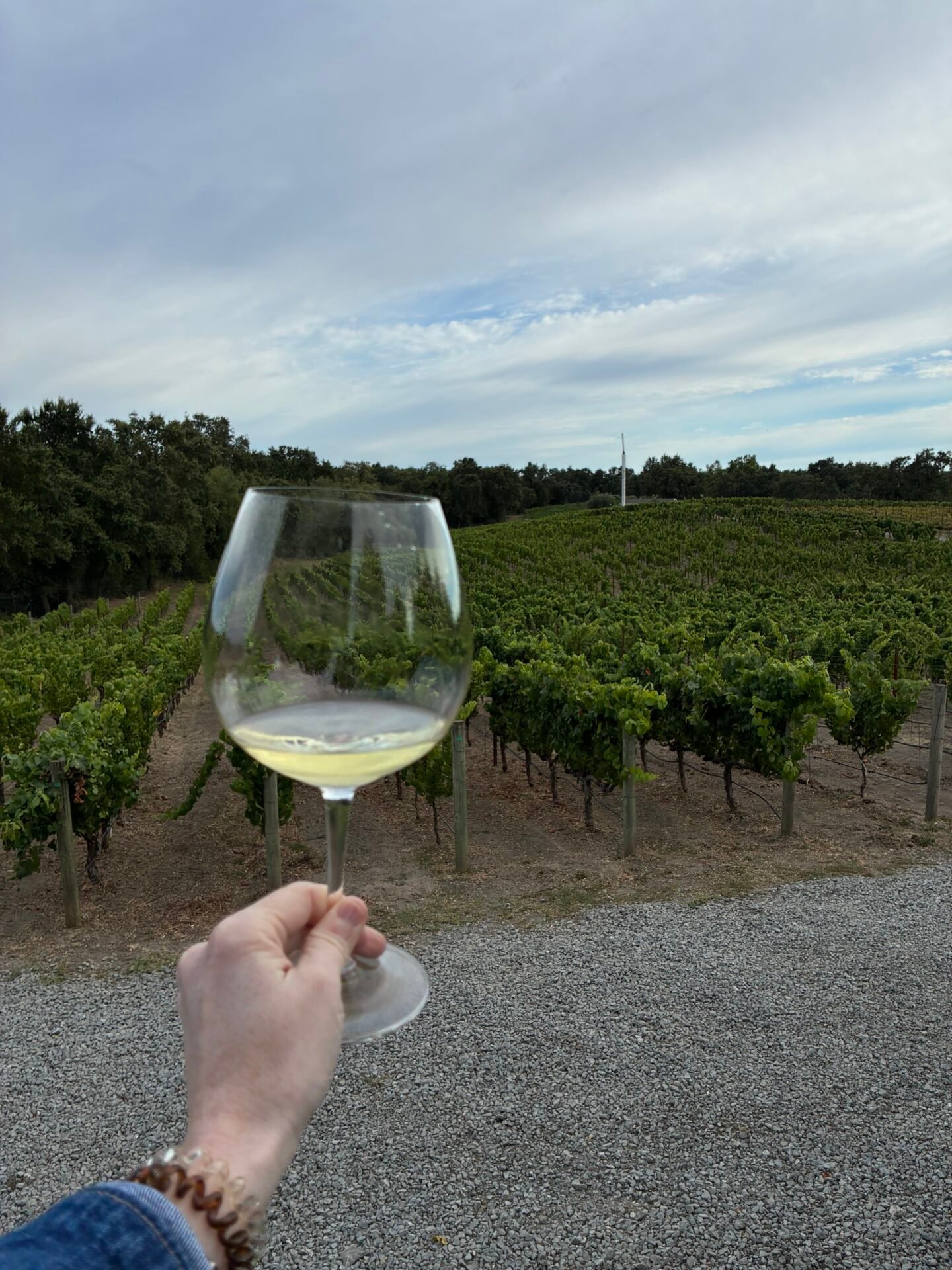 “The cellar as where wine begins. It’s the place where the vineyard finally gets to tell its story.”
The cellar as where wine begins. It’s the place where the vineyard finally gets to tell its story.